
杜旌教授研究体系
杜旌教授研究体系
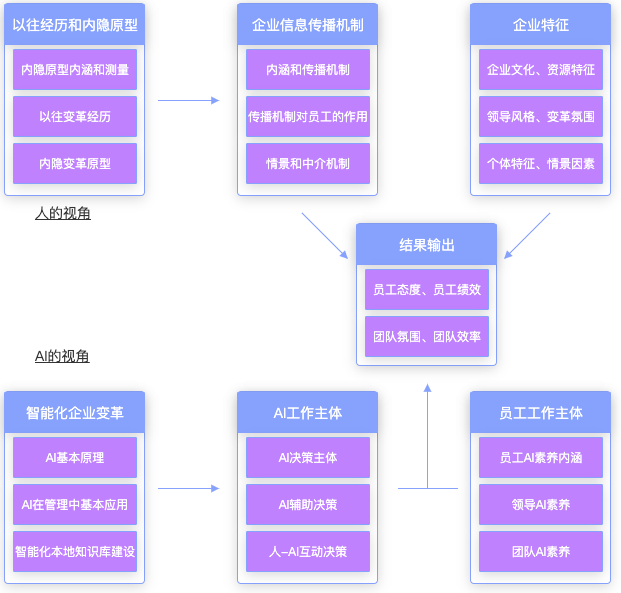
一、主要学术成果:
中文学术论文
1.杜旌,崔雨萌 (2019).未雨绸缪:变革前非正式信息对员工变革抵制意愿的影响. 心理学报. 51(2): 248−258.
2.杜旌,向远(2022). 任务互依、工作无聊与工作场所“玩手机”:基于自我损耗理论的研究. 人力资源管理评论,2022(1)132-146.
3.杜旌,郑雪妮,范维 (2022). 有备无患:后续疫情中新冠焦虑对武汉员工防护和工作的影响研究. 商业经济与管理. 370(8):29 - 40.
4.杜旌,谢欢艳 (2022). 基于计划行为理论的春节期间返乡行为研究. 软科学. 2022-08-10 网络首发
5.呙林义, 杜旌(2021). 一切为了利润的领导:领导底线心智的前因、后果与作用机制. 中国人力资源开发. 38(12):53 - 67.
6.杜旌,刘钰婧,文娟(2021). 基于智能手机的电子化人力资源管理应用影响研究. 珞珈管理评论. 36(1): 32-46.
7.杜旌,叶艺菲(2019). 组织变革前非正式信息:内涵结构及其影响研究. 人力资源管理评论. (2): 30-50.
8.杜旌,叶艺菲,刘钰婧(2021). 好事不出门,坏事传千里?组织变革前非正式信息的传播机制研究. 商业经济与管理. 352(2):34 - 43.
9.杜旌,文娟(2019). 变革前消极非正式信息对员工的影响机制研究. 商业经济与管理. 11:31-41
10.杜旌,范维,张光磊(2019).领导神经质特征对其变革决策的影响研究.珞珈管理评论. 30:38-53.
11.杜旌,裘依伊,尹晶. (2018). 中庸抑制创新吗?——一项多层次实证研究. 科学学研究, 36(2): 378-384.
12.杜旌,段承瑶. (2017). 中庸影响个体的作用机制: 基于任务和关系视角的研究. 珞珈管理评论,20: 77-90.
13.骆元静,杜旌(2016)组织变革前非正式信息的作用机制. 心理科学进展,24(12):1819-1828.
14.杜旌,姚菊花(2015).中庸结构内涵及其与集体主义关系的研究. 管理学报,12(5): 638-646.
15.杜旌,冉曼曼,曹平 (2014). 中庸价值取向对员工变革行为的情景依存作用. 心理学报. 46(1): 113−124.
16.杜旌,穆慧娜,冉曼曼.(2014).员工建言行为:前因和中介机制研究.武汉大学学报. 67(6): 033-041
17.杜旌,李难难,龙立荣.(2014).高绩效工作系统与员工幸福感:基于自我效能中介作用的实证研究.管理学报,11(2): 215-22
18.杜旌,穆慧娜,刘艺婷. (2014). 集体主义的确阻碍创新吗?——一项基于情景作用的实证研究. 科学学研究, 32(6): 919-92
19.杜旌,刘芳.(2014). 平衡与和谐之美: 中庸价值取向对员工幸福感影响实证研究.珞珈管理评论, 8(1): 27-37.
20.杜旌,穆慧娜,陈建安 (2013). “服务补救”视角下人力资源业务合作伙伴系统的改进. 人力资源管理开发, 17: 48-51.
21.杜旌 (2013). 本土文化情境下领导行为对员工变革反应的影响:基于图式理论的动态研究. 心理科学进展. 21: 1531-1541.
22.杜旌,汤雪莲 (2013). 集体主义对个人创新影响的理论探索. 科技进步与对策. 2: 9-12.
23.郭玮,李燕萍,杜旌,陶厚永(2012).多层次导向的真实型领导对员工个体-团队创造力的影响机制研究. 南开管理评论,15: 51-60.
24.杜旌(2009). 绩效工资:一把双刃剑. 南开管理评论. 12, 117-124.
25.杜旌,王丹妮 (2009).匹配对创造性的影响:集体主义的调节作用. 心理学报. 41: 980−988.
26.杜旌,尹晶(2009).无领导小组讨论中个人绩效的影响因素: 基于性格、价值观、团队经验的研究. 南京大学学报(哲学人文社会科学版). 4:132-141.
英文学术论文
1.Xiang, Y., Du, J., Zheng, X.N., Long, L. R., Xie, H. Y. (2024). Judging in the Dark: How Delivery Riders Form Fairness Perceptions Under Algorithmic Management. Journal of Business Ethics, doi : https://doi.org/10.1007/s10551-024-05883-w
2.Du, J., Fan, W., & Choi, J. N (2022). Non-work-related instant messaging in the workplace and daily task performance: complementarity between social and cognitive resources. Journal of Managerial Psychology, 37(2) : 305-318, doi : 10.1108/JMP-01-2021-0014
3.Guo, L. Y., Du, J., & Zhang, J. C. (2024). How supervisor perceived overqualification influences exploitative leadership: the mediating role of job anxiety and the moderating role of psychological entitlement. Leadership & Organization Development Journal Vol. 45 No. 6: 976-991. DOI 10.1108/LODJ-06-2023-0292
4.Guo, L. Y., Du, J., & Zhang, J. C. (2024). Supervisor bottom-line mentality and employee workplace well-being: a multiple mediation model. Baltic Journal of Management. Vol. 19 No. 2: 218-233. DOI 10.1108/BJM-11-2023-0467
5.Chung, G. H., Choi, J. N., & Du, J. (2017). Tired of innovations? Learned helplessness and fatigue in the context of continuous streams of innovation implementation. Journal of Organizational Behaivor, 38(7):1130-1148.
6.Du, J., & Choi, J. N (2010). Pay for performance in emerging market: Insights from China. Journal of International Business Studies, 41: 671-689.
7.Du, J., Shin, Y., & Choi, J. N. (2015). Convergent perceptions of organizational efficacy among team members and positive work outcomes in organizational teams. Journal of Occupational and Organizational Psychology, 88:178-202.
8.Shin, Y., Du, J., & Choi, J. N. (2015). Multi-level Longitudinal Dynamics Between Procedural Justice and Interpersonal Helping in Organizational Teams. Journal of Business and Psychology, 30:513–528.
9.Chung, G. H., Du, J., & Choi, J. N. (2014). How Do Employees Adapt to Organizational Change Driven by Cross-border M&As? A Case in China. Journal of World Business. 49, 78-86.
10.Du, J., & Choi, J. N. (2013). Leadership Effectiveness in China: The Moderating Role of Change Climate. Social Behavior & Personality: An International Journal, 41, 1571-1584.
11.Du, J., Choi, J. N., & Hashem, F. (2012). Interaction between One’s Own and Others’ Procedural Justice Perceptions and Citizenship Behaviors in Organizational Teams: The Moderating Role of Group Identification. Group Dynamics: Theory, Research, and Practice. 16:289–302.
12.Du, J. (2009). Chinese or international? Diversity of HRM practice in China. Korean Human Resource Management. 7, 56-57.
二、学术专著
1. 杜旌(2019). 中庸研究 : 探寻现代组织管理中的传统文化力量. 社会科学文献出版社, 北京.
2. 杜旌. (2014). 绩效考评变革研究. 社会科学文献出版社, 北京.